Optimal Apartment Balcony Directions for Cool Breezes in HCMC
- Which Apartment Balcony Direction is Coolest in HCMC: Climate and Geography Analysis
- Analysis of Optimal Balcony Directions for Coolness and Ventilation
- Urban Planning and Design Factors Influencing Apartment Ventilation
- Analysis of Typical HCMC Apartment Projects by Balcony Direction
- Expert Advice for Affluent Families and Savvy Investors on Balcony Orientation
- FAQ: Frequently Asked Questions About Choosing Apartment Balcony Directions
Selecting the right apartment balcony orientation is paramount for enhancing living quality and investment value, particularly in Ho Chi Minh City’s tropical climate. This article provides an in-depth analysis of balcony directions that maximise coolness and natural ventilation, grounded in actual climate data and prominent developments.
Which Apartment Balcony Direction is Coolest in HCMC: Climate and Geography Analysis
To determine the coolest apartment balcony direction in Ho Chi Minh City, we must understand the city’s climate characteristics and prevailing wind patterns. The optimal balcony orientation will be one that avoids intense heat and captures natural breezes, fostering a comfortable and energy-efficient living environment.
Ho Chi Minh City experiences a tropical monsoon climate, with two distinct seasons: the wet season (May to November) and the dry season (December to April). The most critical factors influencing apartment orientation choice are sun exposure and wind direction:
Sun Exposure and Its Impact on Apartment Temperature
- Morning Sun (East): The sun rises in the East, providing morning sunlight. Morning sun is generally gentler and less intensely hot. Apartments facing East can welcome early natural light, fostering a positive ambiance. However, if an East-facing balcony lacks adequate shielding, the sun can become intense during peak dry season months.
- Afternoon Sun (West): The sun sets in the West, casting afternoon sunlight. West-facing sun is the most intense, lasting from noon until late afternoon, accumulating significant heat in walls and glass, making apartments hot and difficult to cool. West-facing apartments often incur higher electricity costs for air conditioning.
- South and North Facing Sun: South and North facing sun is typically less intense. South-facing apartments receive consistent but not overly harsh sunlight, while North-facing apartments receive less direct sun, generally remaining cooler year-round.
Prevailing Winds in HCMC and Natural Ventilation Potential
Ho Chi Minh City is influenced by two primary wind currents:
- Southwest Monsoon: Blows from May to October (wet season). This wind carries moisture from the sea, offering a cooling effect but potentially increasing humidity.
- Northeast Monsoon: Blows from November to April (dry season). This wind is typically drier and cooler, especially in the late and early parts of the year.
Based on this analysis, the most ideal balcony direction for coolness and ventilation in Ho Chi Minh City is Southeast. This orientation effectively avoids the harsh afternoon sun from the West, welcomes gentle morning sun, and crucially, captures the cooling sea breezes, particularly the Southwest monsoon winds. South and East are also favourable choices, with South offering stable breezes and less harsh sun, while East captures early sun and morning breezes.
Analysis of Optimal Balcony Directions for Coolness and Ventilation
Choosing an apartment balcony orientation extends beyond merely avoiding the sun; it involves optimising natural ventilation to create a breezy and energy-efficient living space. Here’s a detailed breakdown of balcony directions highly regarded for their coolness and ventilation capabilities in Ho Chi Minh City.
Southeast: The Golden Choice for a Tropical Climate
The Southeast direction is considered the most ideal for apartment balconies in Ho Chi Minh City. Southeast-facing balconies receive gentle morning sun, avoiding the harsh afternoon glare from the West. More importantly, this orientation captures the refreshing sea breezes, particularly the Southwest monsoon during the wet season and a portion of the Northeast monsoon during the dry season. This keeps apartments consistently airy, reducing reliance on air conditioning and lowering utility costs, thereby enhancing comfort and liveability.
Real-world examples: Projects like Masteri Thao Dien (formerly District 2, now Thu Duc City) and The Ascent Thao Dien feature numerous Southeast-facing apartments, especially those overlooking the Saigon River. These units typically command higher sale and rental prices due to their advantageous views and cool environment. The rental yield for Southeast-facing units at Masteri Thao Dien can reach 5-6% annually, approximately 0.5-1% higher than comparable units facing West or Northwest.
South: Stable Breezes, Moderate Sun Exposure
A South-facing orientation is also an excellent choice. South-facing balconies receive consistent, albeit moderate, sunlight, especially during summer. This direction also benefits from cooling breezes from the south, ensuring good ventilation. Compared to Southeast, South-facing apartments might receive slightly less wind depending on the building’s specific location and surrounding structures, but still maintain a cool and comfortable atmosphere.
Real-world examples: In developments such as Vinhomes Central Park (Binh Thanh District), many towers are designed to optimise South-facing apartments, particularly those with views of the park or the Saigon River. Secondary market prices for South-facing units here remain stable and exhibit high liquidity. For instance, a 2-bedroom unit facing South in Park 6 or Park 7 averages around VND 70-80 million/sqm, whereas similar units facing West might be 5-10% lower.
East: Morning Sun, Refreshing Morning Breezes
East-facing balconies capture the morning sun, bringing energy and freshness to the apartment. Morning sunlight is generally less intense and gradually softens towards noon. East-facing apartments can also catch cool morning breezes, especially the Northeast monsoon during the dry season. However, on hot summer days, without proper shading or effective insulation, the apartment might feel warm in the morning.
Real-world examples: Projects along Mai Chi Tho Avenue in Thu Duc City, such as The Sun Avenue and Waterina Suites, offer many East-facing apartments with unobstructed views of the river or the city skyline. These units are popular among those who appreciate fresh air and natural morning light. Rental prices for 2-bedroom units at The Sun Avenue range from VND 12-18 million per month, comparable to South-facing units.
Directions Requiring Careful Consideration
- West and Northwest: These directions demand the most careful consideration due to intense afternoon sun exposure, leading to hot interiors and higher cooling costs. If these directions are unavoidable, prioritise units with spacious balconies, overhangs, or employ insulating materials and Low-E glass to mitigate heat impact.
- North: North-facing apartments typically receive minimal direct sunlight, making them cool year-round. However, ventilation might be less effective compared to Southeast or South orientations, depending on the building’s design and surrounding structures.
Table 1: Comparison of Main Balcony Directions in HCMC: Pros and Cons
| Balcony Direction | Advantages | Disadvantages | Recommendation |
|---|---|---|---|
| Southeast | Cool year-round, excellent ventilation, gentle morning sun | Typically higher price point | Most optimal choice |
| South | Stable breezes, moderate sun, cool | Potentially less windy than Southeast depending on location | Very good choice |
| East | Morning sun, refreshing morning breezes | Morning sun can be intense in dry season | Good choice |
| North | Minimal direct sun, cool | Ventilation may be limited | Acceptable choice |
| West/Northwest | Intense afternoon sun, hot | High cooling costs, less comfortable environment | Requires robust heat-mitigation solutions |
Urban Planning and Design Factors Influencing Apartment Ventilation
Beyond balcony orientation, overall urban planning and building architectural design significantly influence natural ventilation and coolness within apartments. An apartment with a favourable orientation might still underperform if situated in a wind-blocked area or designed with poor airflow.
Overall Urban Planning
- Building Spacing: Projects with lower construction density and ample space between buildings create natural wind corridors, facilitating better air circulation. Conversely, high-density urban areas with closely packed buildings can create wind tunnel effects or block breezes, reducing ventilation.
- Landscaping and Green Spaces: Parks, water bodies, and green areas within a development not only enhance aesthetics but also regulate the microclimate, reduce ambient temperature, and increase humidity, contributing to cooler breezes. Projects near large parks like Vinhomes Central Park or Sala Dai Quang Minh benefit from such advantages.
- Proximity to Rivers and Canals: Developments along the Saigon River, Kenh Te, or Nhieu Loc Canal benefit from breezes originating from the water, carrying humidity and coolness. This is a key reason why riverside apartments are highly sought after and command premium prices.
Building Architectural and Apartment Design
- Facade Design: Buildings with stepped facades, numerous openings, or protruding balconies can promote better air convection. The use of external materials with good thermal insulation properties also helps reduce heat absorption.
- Balcony Design: Spacious balconies with overhangs or sun louvres enhance aesthetic appeal and provide effective sun shielding, particularly for sun-intense directions.
- Cross-Ventilation Design: Apartments with smart designs allowing for airflow between opposite openings (e.g., a balcony and a bedroom window) create cross-ventilation, maximising air circulation. This is crucial for maintaining a cool and dry living environment.
- Floor Height: Higher floor apartments generally receive better breezes and are less affected by surrounding obstructions. However, very high floors might experience strong winds, requiring appropriate design considerations.
Real-world examples: The Metropole Thu Thiem (Thu Duc City) is planned with low construction density, abundant green spaces, and a prime location by the Saigon River. Its towers are spaced appropriately to optimise natural airflow. Apartments here, especially those facing Southeast or South, offer exceptionally airy and cool living environments, reflected in their premium pricing, ranging from VND 150-250 million/sqm depending on the phase and unit.
Analysis of Typical HCMC Apartment Projects by Balcony Direction
To provide readers with a clearer perspective on selecting balcony orientations, we will delve into specific prominent apartment projects in Ho Chi Minh City, evaluating the advantages and disadvantages of common balcony directions within each.
District 2 Area (Thu Duc City): Riverside Advantages and Modern Planning
The former District 2, particularly Thao Dien and Thu Thiem, is renowned for its high-end apartment projects strategically located along the Saigon River, offering cool breezes and picturesque views.
- Masteri Thao Dien:
- Location: Frontage of Vo Nguyen Giap Boulevard (formerly Hanoi Highway), directly connected to Metro Line 1 (Ben Thanh – Suoi Tien).
- Popular Balcony Directions: Southeast-facing units overlooking the Saigon River and Thao Dien villa enclave. These units capture cool river breezes and avoid afternoon sun, with 2026 secondary market prices averaging VND 85-100 million/sqm and steady rental yields of 4.8-5.5%.
- Directions to Consider: Northwest-facing units facing the internal courtyard or main thoroughfare tend to be warmer in the afternoon, with secondary market prices approximately 10-15% lower (ranging from VND 75-85 million/sqm).
- The Metropole Thu Thiem:
- Location: Functional Area No. 1, Thu Thiem New Urban Area, adjacent to Ba Son Bridge and the Saigon River waterfront promenade.
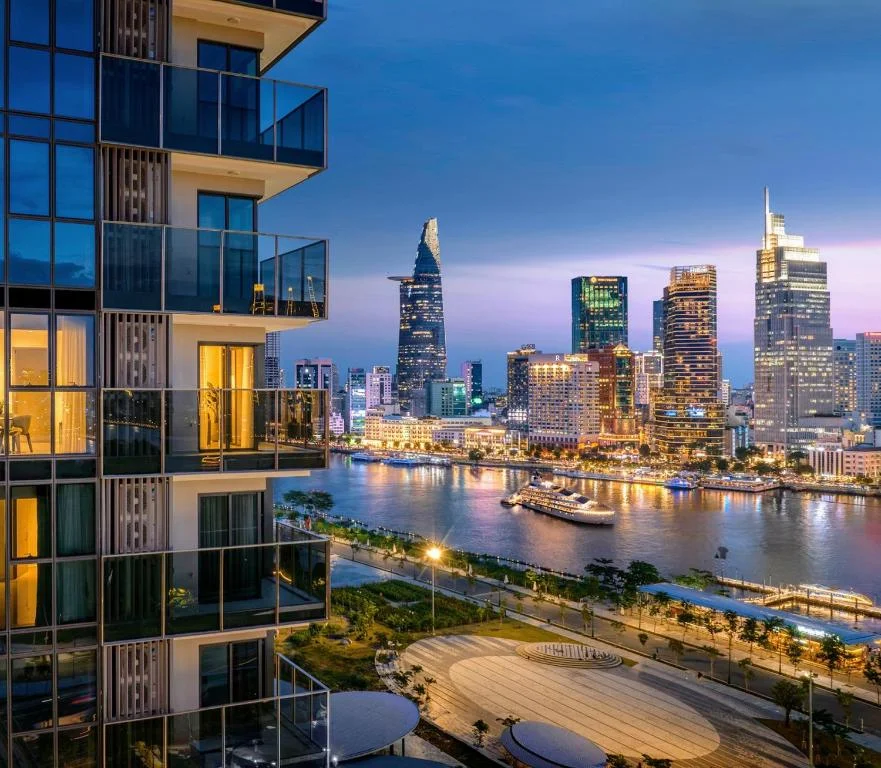
- Popular Balcony Directions: Southeast and South-facing units directly overlooking the Saigon River, Ba Son Bridge, and the District 1 skyline (particularly at The Opera Residence). These trophy units command the highest secondary prices in Thu Thiem, ranging from VND 260-360+ million/sqm, prized for year-round natural breezes and protected panoramic vistas.
- Directions to Consider: Northwest-facing units facing the central landscape or Crescent Boulevard, while shielded by high-spec triple-glazed Low-E glass, trade at a competitive range of VND 200-240 million/sqm.
Binh Thanh District: Diverse Options, Proximity to the Centre
Binh Thanh District hosts numerous apartment projects, from mid-range to luxury, benefiting from proximity to the city centre and several riverside developments.
- Vinhomes Central Park:
- Location: Nguyen Huu Canh street frontage, along the Saigon River, adjacent to the landmark 14-hectare riverside park.
- Popular Balcony Directions: Southeast and South-facing units overlooking the Saigon River and the vast park. With abundant airflow from the river, these units command high liquidity, with 2026 secondary prices from VND 100-125 million/sqm and rental yields of 4.8-5.3%.
- Directions to Consider: West or Northwest-facing units facing the internal podium or city backdrop experience higher afternoon temperatures, trading at VND 82-92 million/sqm.
- City Garden:
- Location: 59 Ngo Tat To street, immediately adjacent to District 1.
- Popular Balcony Directions: Southeast and South-facing units on higher levels enjoy unobstructed panoramic views of the Saigon River and Landmark 81. The distinctive elliptical tower architecture creates a natural venturi effect that enhances air circulation, with 2026 secondary market prices spanning VND 95-115 million/sqm.
District 7: Green Living, Integrated Planning
District 7, especially the Phu My Hung urban area, is known for its integrated planning, abundant green spaces, and high-quality living environment.
- Midtown Phu My Hung:
- Location: Nguyen Luong Bang Boulevard, Phu My Hung, nestled beside Sakura Park and Ca Cam River.
- Popular Balcony Directions: Southeast and South-facing units enjoying open views of the river and Sakura Park. Due to the extensive water surface and mature green canopy, ambient temperatures at the balcony are typically 1.5 – 2°C cooler. 2026 secondary prices remain resilient at VND 95-125 million/sqm, with rental yields between 4.6-5.2%.
Table 2: Comparison of Average Secondary Prices and Rental Yields for Selected Projects by Balcony Direction (HCMC Market Data 2026)
| Project | Area | Balcony Direction | Secondary Price 2026 (Million VND/sqm) | Estimated Rental Yield (%) |
|---|---|---|---|---|
| Masteri Thao Dien | Thu Duc City | Southeast (Saigon River view) | 85 – 100 | 4.8 – 5.5 |
| Masteri Thao Dien | Thu Duc City | Northwest (Internal / Highway view) | 75 – 85 | 4.2 – 4.7 |
| Vinhomes Central Park | Binh Thanh | Southeast (River / 14ha Park view) | 100 – 125 | 4.8 – 5.3 |
| Vinhomes Central Park | Binh Thanh | West / Northwest (Internal / City view) | 82 – 92 | 4.0 – 4.5 |
| The Metropole Thu Thiem | Thu Duc City | Southeast (Direct River / Dist. 1 view) | 260 – 360 | 4.0 – 4.6 |
| The Metropole Thu Thiem | Thu Duc City | Northwest (Internal / Landscape view) | 200 – 240 | 3.8 – 4.3 |
| Midtown Phu My Hung | District 7 | Southeast / South (River / Sakura Park) | 95 – 125 | 4.6 – 5.2 |
Expert Advice for Affluent Families and Savvy Investors on Balcony Orientation
Selecting an apartment balcony orientation is a significant decision impacting living quality and investment returns. Here are expert recommendations for affluent families and discerning investors in Ho Chi Minh City.
For Affluent Families
The primary focus for families is a comfortable, cool, and healthy living environment. Therefore, balcony selection should prioritise:
- Prioritise Southeast and South Orientations: These are the most optimal directions for coolness and ventilation, minimising the need for air conditioning, saving electricity, and promoting a healthier living space.
- Consider View and Noise Factors: A Southeast-facing balcony with a river or park view offers dual benefits: coolness and aesthetic appeal with reduced noise pollution. Avoid apartments with balconies facing major roads if the family includes young children or elderly members who value tranquility.
- Verify Ventilation Design: Even with a favourable orientation, ensure the apartment features effective cross-ventilation (e.g., windows opposite the balcony) for optimal air circulation.
- Conduct Site Visits at Different Times: If possible, visit the apartment during morning, noon, and afternoon to personally assess sun exposure and airflow.
For Savvy Investors
Investors must evaluate balcony orientation from the perspective of capital appreciation and rental potential. Apartments with favourable orientations typically exhibit higher liquidity and sustained value.
- Invest in Southeast/South-Facing Units: Although the initial purchase price may be higher, these units consistently attract strong rental and resale demand, ensuring stable returns and long-term capital growth. Tenants, especially expatriates, highly value coolness and ventilation.
- Assess Overall Project Value: Beyond balcony orientation, consider project factors like location, developer reputation, internal amenities, and surrounding infrastructure (proximity to Metro stations, international schools, hospitals). Well-planned projects enhance the value of all units, regardless of orientation.
- Analyse Actual Rental Yields: Review rental yield data for units with different orientations within the same project. Well-oriented units generally achieve higher rental yields and shorter vacancy periods.
- Consider Heat Mitigation for West-Facing Units: If investing in West-facing apartments is necessary due to budget or view considerations, factor in the costs of installing blackout curtains, Low-E glass, or other insulation solutions. This can enhance rental appeal and resale value while reducing operational costs for tenants.
General Advice: Do not rely solely on intuition or agent recommendations. Conduct thorough research on the climate, planning, and design of the project. Consult with architectural, planning experts, or experienced independent real estate consultants to make an informed decision.
FAQ: Frequently Asked Questions About Choosing Apartment Balcony Directions
1. Is a Northeast-facing balcony good?
A Northeast-facing balcony is generally considered quite good. It receives gentle morning sun and avoids harsh afternoon heat. Particularly during the dry season (November to April), it benefits from the dry and cool Northeast monsoon winds, offering comfort. However, during the wet season, its ventilation potential might be less than Southeast or South orientations.
2. Should I buy an apartment with a West-facing balcony?
Buying an apartment with a West-facing balcony requires careful consideration. West-facing apartments are exposed to intense afternoon sun from noon until evening, making interiors hot, increasing electricity consumption for cooling, and potentially impacting health. If a West-facing orientation is unavoidable, prioritise units with spacious balconies, overhangs, sun louvres, or use Low-E insulating glass and thick curtains to minimise heat. West-facing apartments are often priced lower, but operational costs (electricity) will be higher.
3. How can I check the actual wind direction for an apartment?
To check the actual wind direction, visit the apartment at different times of the day and, if possible, during different seasons. Observe the wind’s path onto the balcony and through windows. You can also consult regional wind maps, seek advice from current residents of the project, or consult urban planning experts for an overview of natural airflow patterns in the area.
4. Which is more important: balcony direction or view?
Both balcony direction and view are important, but the priority depends on individual needs. For families prioritising comfort and coolness, balcony direction (Southeast, South) is more critical. For investors or those valuing aesthetics and capital appreciation, a beautiful view (river, park, city skyline) might be the deciding factor, provided effective heat mitigation solutions are in place for non-ideal balcony orientations.
5. Are higher floor apartments cooler than lower floors?
Generally, higher floor apartments tend to be cooler than lower floors. This is because upper levels are less obstructed by surrounding buildings, receive better breezes, and the ambient air temperature is typically slightly lower. However, very high floors might experience strong winds, which could be uncomfortable without appropriate window or balcony designs. Conversely, lower floors can be affected by ground heat and surrounding structures, as well as noise and dust.

NALUX Urban Research & Development Division
A dedicated team of market data analysts, biophilic architects, and luxury real estate legal appraisers at NALUX Development Corporation. All insights and forecasts are founded on verified master planning data and independent field audits.